
The Ideal Bathroom Experience
The Japanese have even perfected toilets!

As a lover of travel, I’ve always felt that the bathroom experiences abroad can be quite unpredictable. I’ve been in restrooms that were unkept, stinky, too small, dark or just plain gross. Probably the majority of my most entertaining/horrific bathroom stories come from the time I’ve spent with my family in Morocco. I’ll spare you most of the details, but I’ve been locked in a bathroom more than once and then, of course, there is the traditional hole-in-the-ground experience (which can come as quite a shock, initially, to someone who grew up in the U.S. like I did). There’s nothing quite like walking into a bathroom, searching for the toilet and suddenly realizing there isn’t one, then looking down between your feet and realizing that the small circular opening in the ground is what is considered a toilet in that specific setting. The holes-in-the-ground are on a spectrum. I attended a traditional Berber wedding up in the mountains where the outhouse was a small wooden shack, and the restroom was truly a large hole that had been dug in the dirt. That’s extreme and pretty rare nowadays. In many other places, like my family home, it’s more common for the “hole in the ground” to actually be a very established porcelain base with traction markings for one’s feet and a running water from a faucet with a bucket for “flushing”.
The very first time we visited Japan, Dymond and I attended a spring practice for his team, the Blue Thunders. We were at a local sports complex for the town of Ichikawa where we used their soccer field to run American football drills. When I hiked up the bleachers to use the bathroom, I was surprised to find what was familiar to me as the “hole-in-the-ground” toilet that I’ve grown to become quite fond of (and to actually prefer, in many cases) after multiple visits to Morocco as an adult. Just like home! Afterall, a hole-in-the-ground is how human beings relieved themselves for almost all of our time on earth besides the past few centuries, or decades in some places.
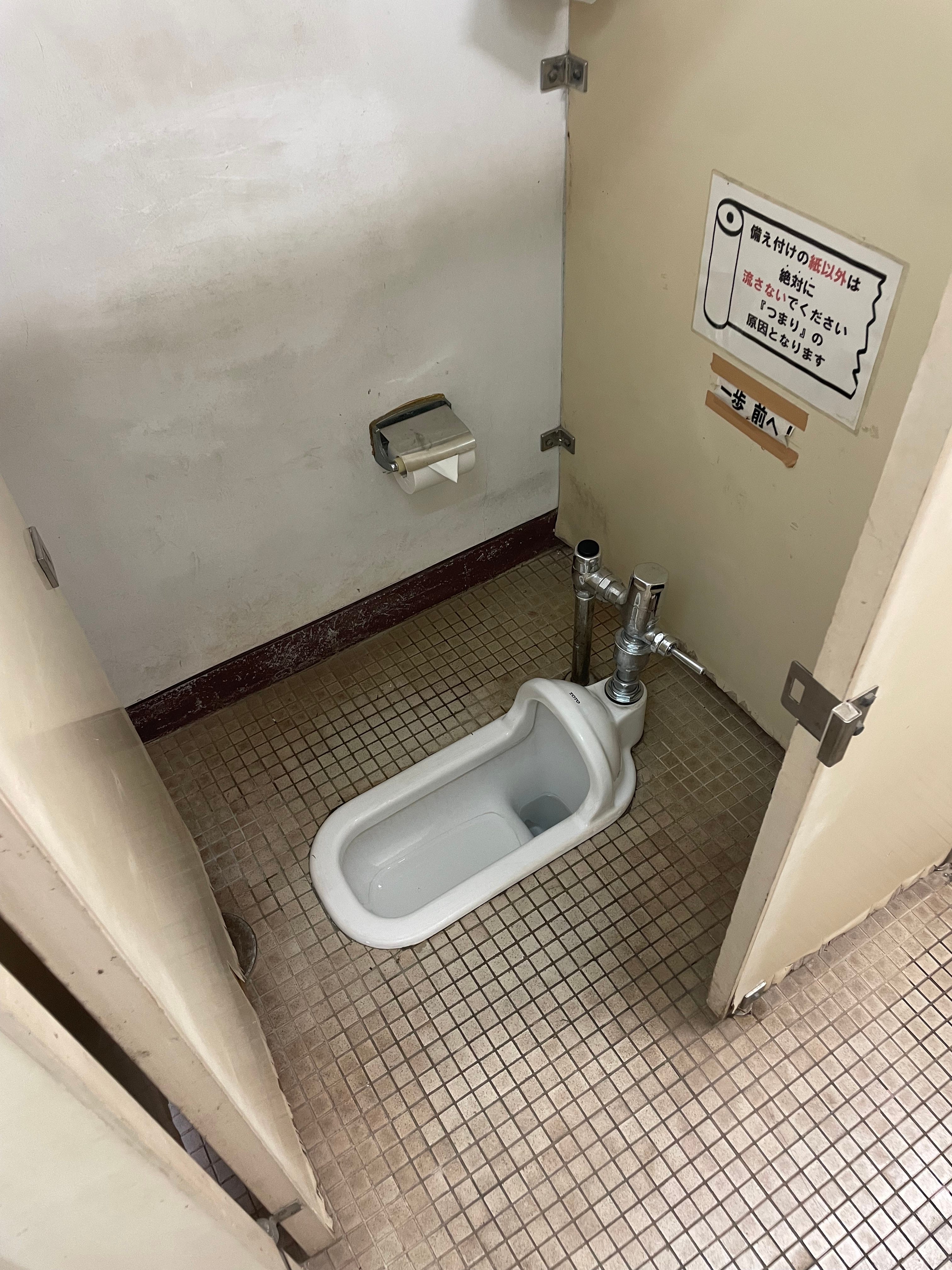
Of course, this one was a bit more structured than I’d seen in Morocco. But still very familiar! To this day, I’ve only seen a toilet like this less than a handful of times while living in Japan. Always in smaller towns, in more rural settings, and normally at a park or outdoor public space. Besides these few exceptions, I can say confidently that the modern Japanese toilets are phenomenal works of engineering. I’m not exactly sure how long ago it took place and how swiftly this transition has been but today the toilets of Japan are practically futuristic.
Just like most areas of life, the Japanese seem to have perfected the toilet. In McDonalds’ and convenient stores, in train stations and even on-board bullet trains, the toilets are remarkable. They are sparkling clean, free of odor and that’s just the beginning!
Many toilets in Japan have extensive electronic features for the user’s convenience. It’s common for there to be a small speaker attached to the wall that plays a gently hushed sound of ocean waves for your privacy and to respect other restroom goers. I’ve seen speakers that turn on and off automatically when someone enters the stall, as well as ones that are manually controlled by a button, only to be used if you feel it is necessary. Some even have volume controls!
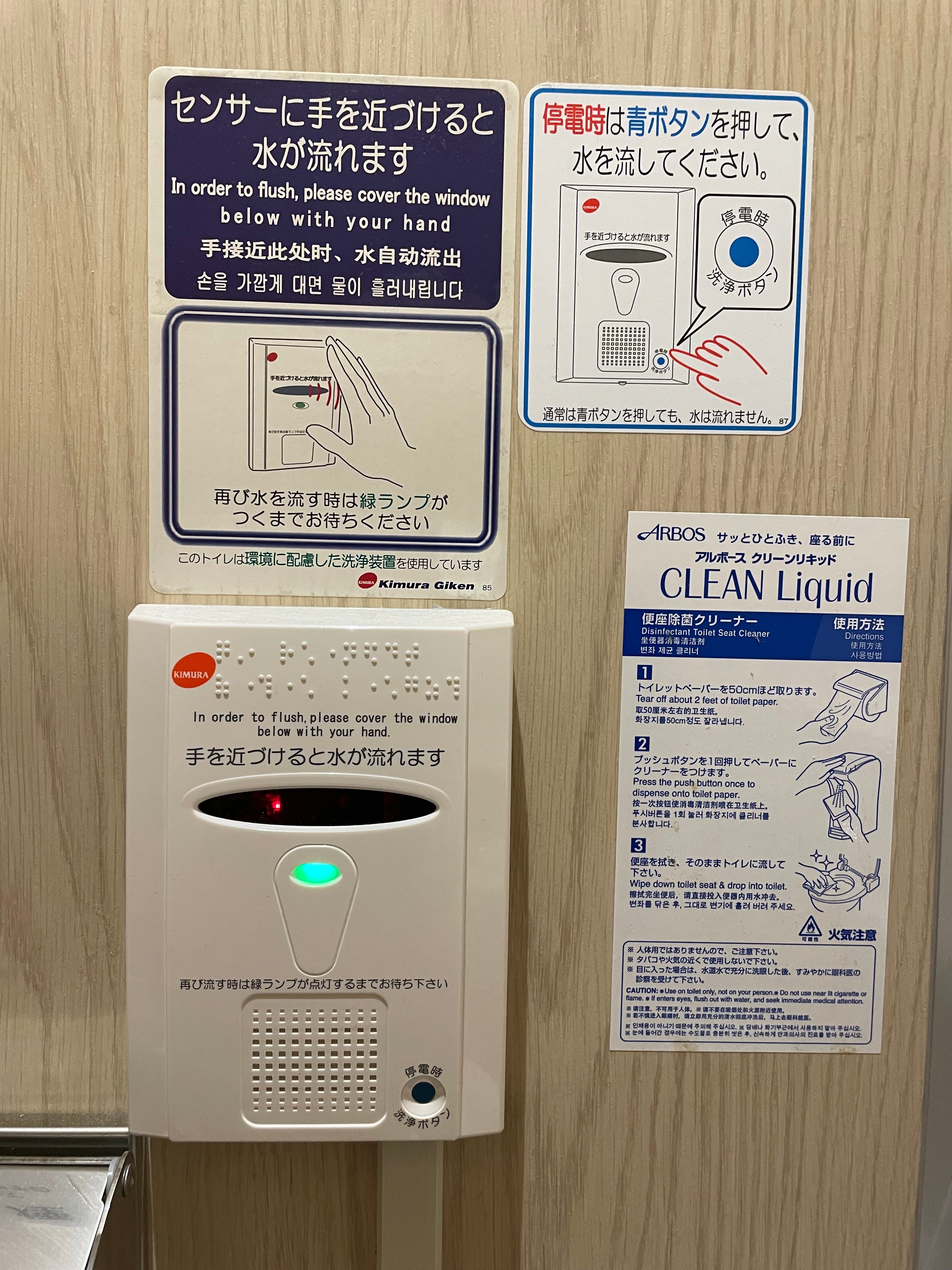
It’s also not unheard of for the toilet seat to be heated, especially in the winter. It can be alarming at first, since this might be associated with someone previously having taken their sweet time in the bathroom. But, in fact, this is simply to minimize the discomfort of freezing cold porcelain on your bottom. How considerate! As the temperatures are dropping and the rainy season is in full swing, this is a very luxurious feature nowadays.
Then there is the Japanese bidet. Sure, I thought I’d used a bidet before in the U.S. I remember a family friend’s house where there was a small dial that could be rotated to adjust the spray pressure. I remember thinking how fancy that was! Well, now I know the full extent of a bidet’s possibilities.
Sometimes the bidet remote controls are attached to the side of the toilet seat and other times they are on a panel mounted to the wall of the stall. The settings are extensive. There are normally options for male or female washing, since our anatomy calls for different preferences. Then within these choices there are still further opportunities to customize water pressure levels, water temperature duration and oscillation. Nothing else will leave you so squeaky clean.
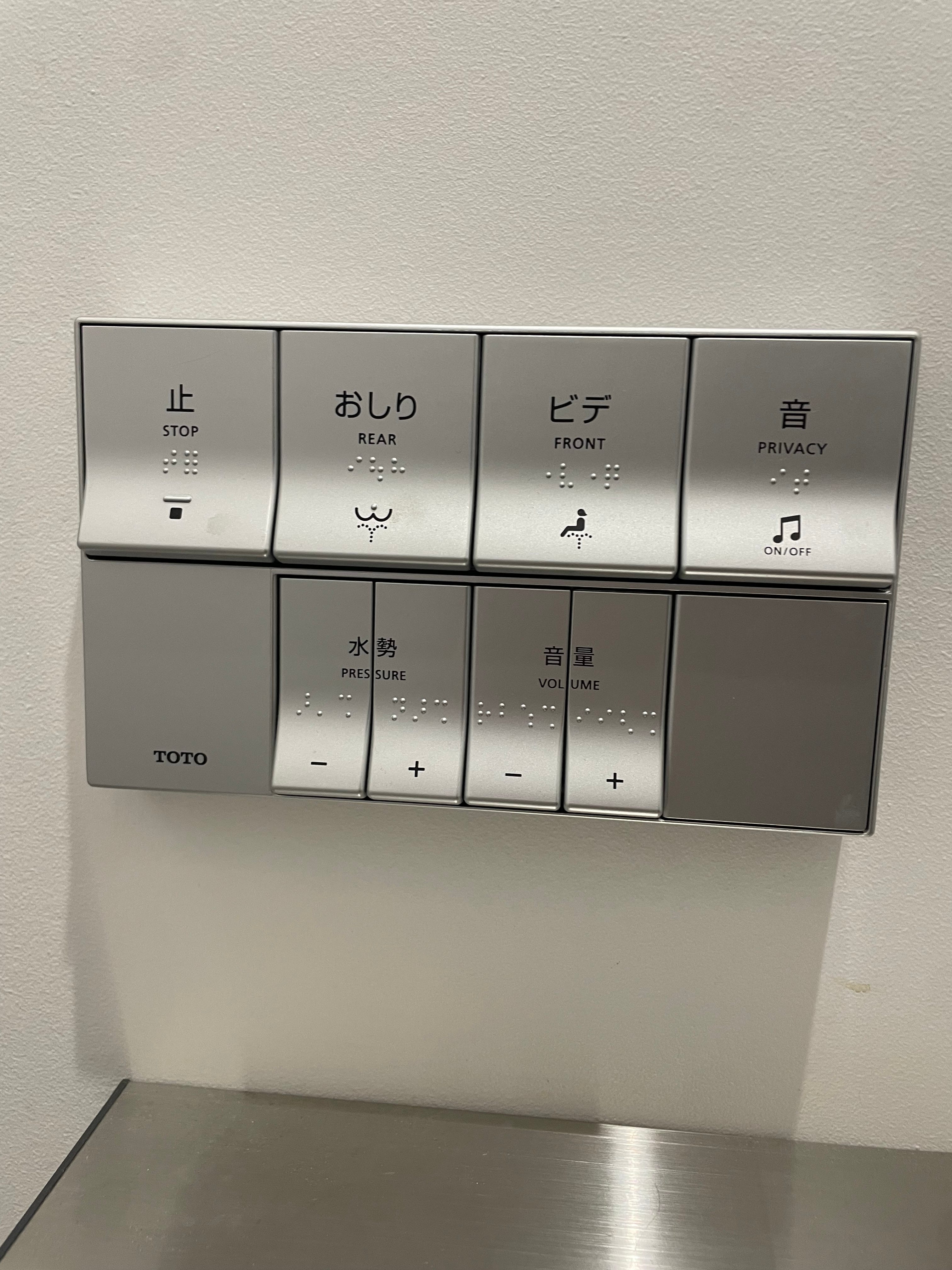
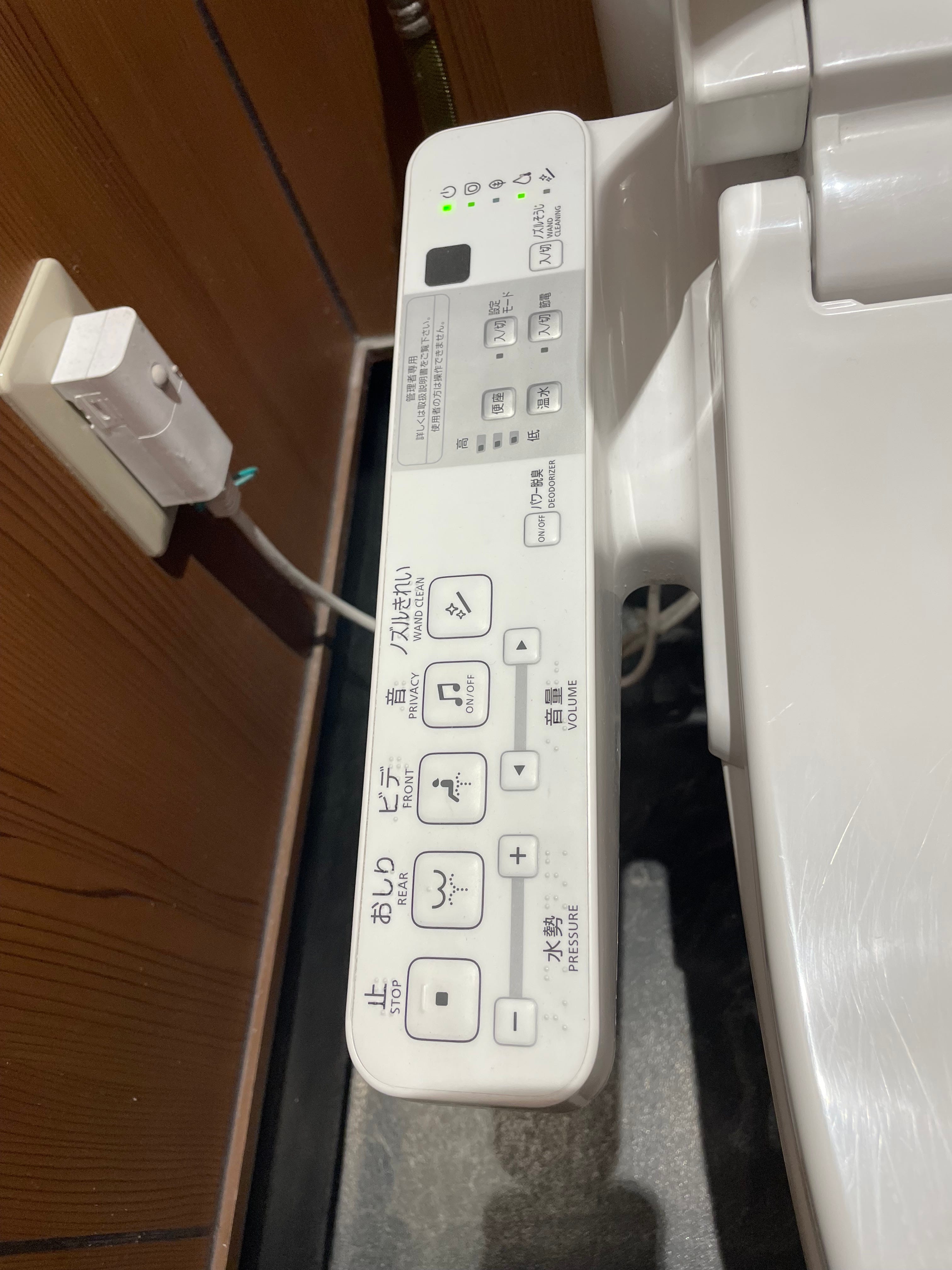
Even the toilets are self-cleaning! I’ve seen settings that manually opt for bowl cleaning or bidet wand cleaning, and I’ve also been in restrooms with a sign asking the user to close the lid after use which I notice is followed by series of spraying sounds since the toilet is automatically programmed to clean itself.
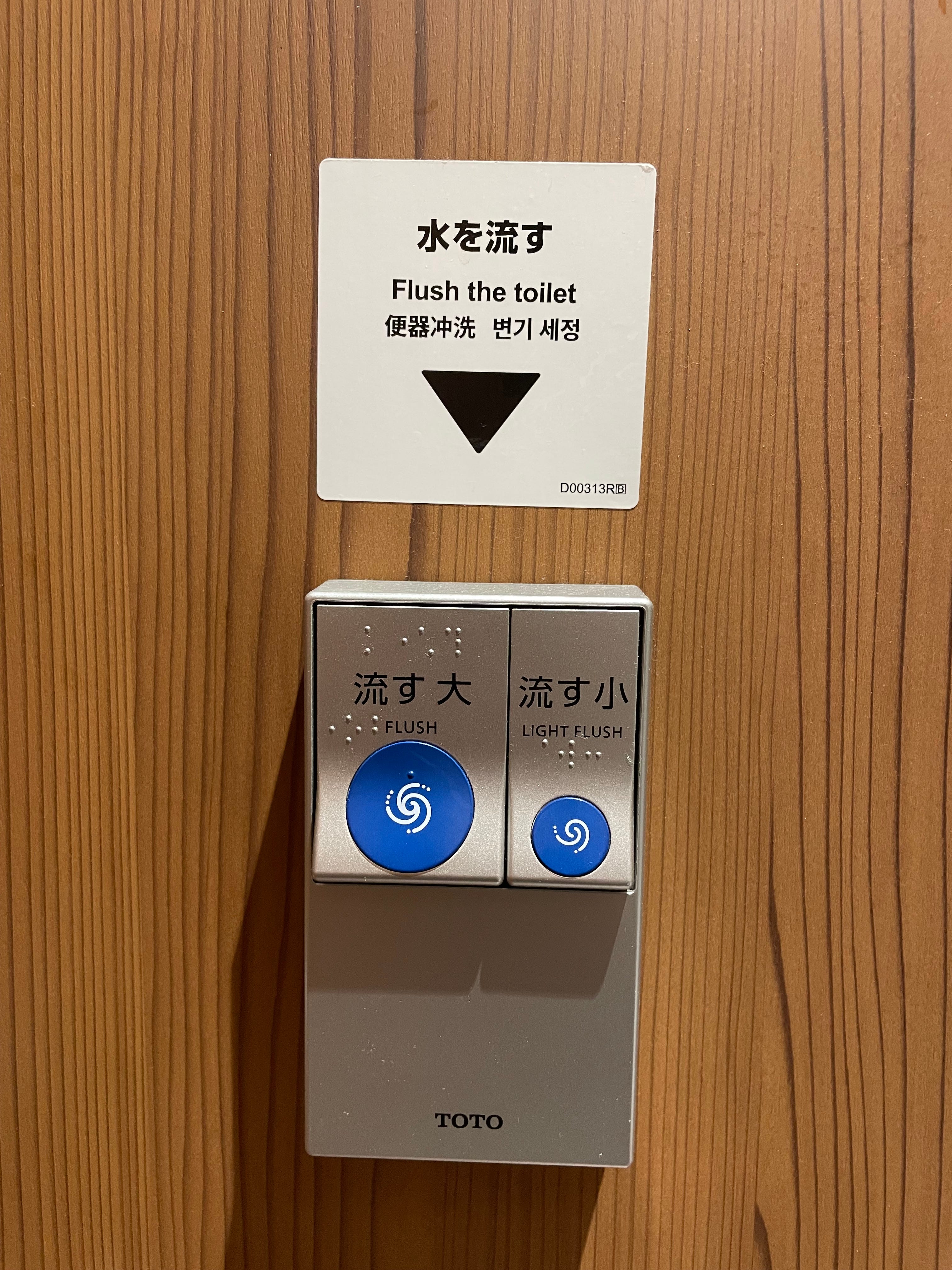
Although bidets are not present in every single toilet, it is incredibly common to have two flushing options on even the “older” toilets. While this has become more and more common in the U.S. recently, I feel it’s almost standard here in Japan and probably saves a great deal of water.
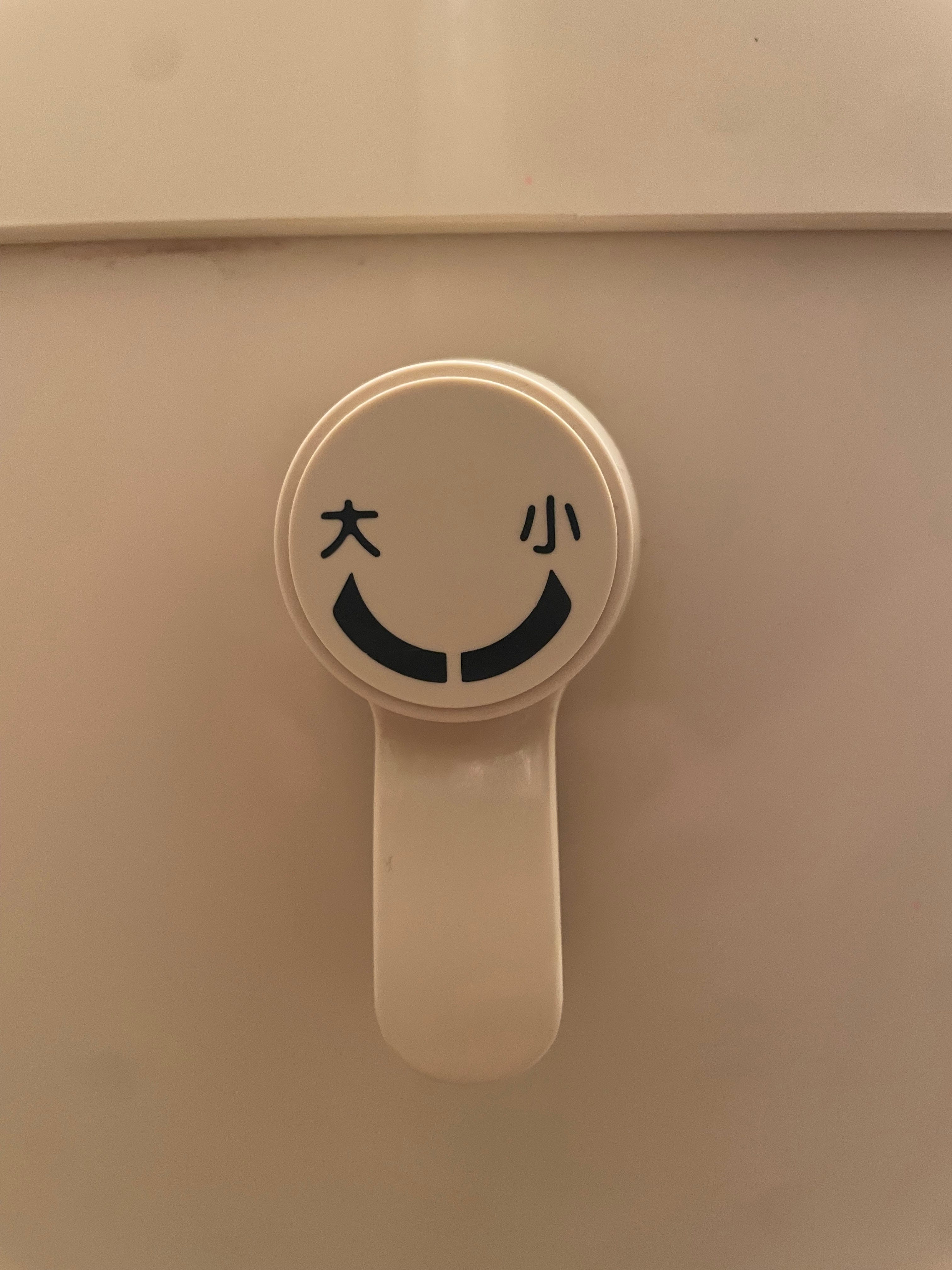
The character on the left of the handle means “big” and the character on the right means “small”.
As a foreigner, if I had to try to find one specific area that is unsatisfactory - it would be the hand drying situation. Public sinks are normally very clean and functional and at times are even decorative beyond belief. The soap dispensers vary but are mostly simple and only occasionally automatic. There are no paper towels. Almost never. Hand dryers are rare, although I’ve seen a few for sure it is by no means an everyday sighting. Even this is actually a blessing in disguise. During my first visit to Japan in 2023, I quickly identified that most women, after washing their hands, reached into their purses to grab small personal-sized hand towels. I convened with Dymond who revealed that in the men’s bathroom most guys were shaking off their hands vigorously then running their fingers through their hair and heading out. We have since invested in a variety of small towels that we cycle through in our everyday bags (our gender-neutral term for what most call a “purse”). Dymond’s are mostly gray or striped, and I have some with giraffes, panda bears and penguins. We are now mostly used to carrying these with us and whipping them out in public restrooms which saves paper and energy!
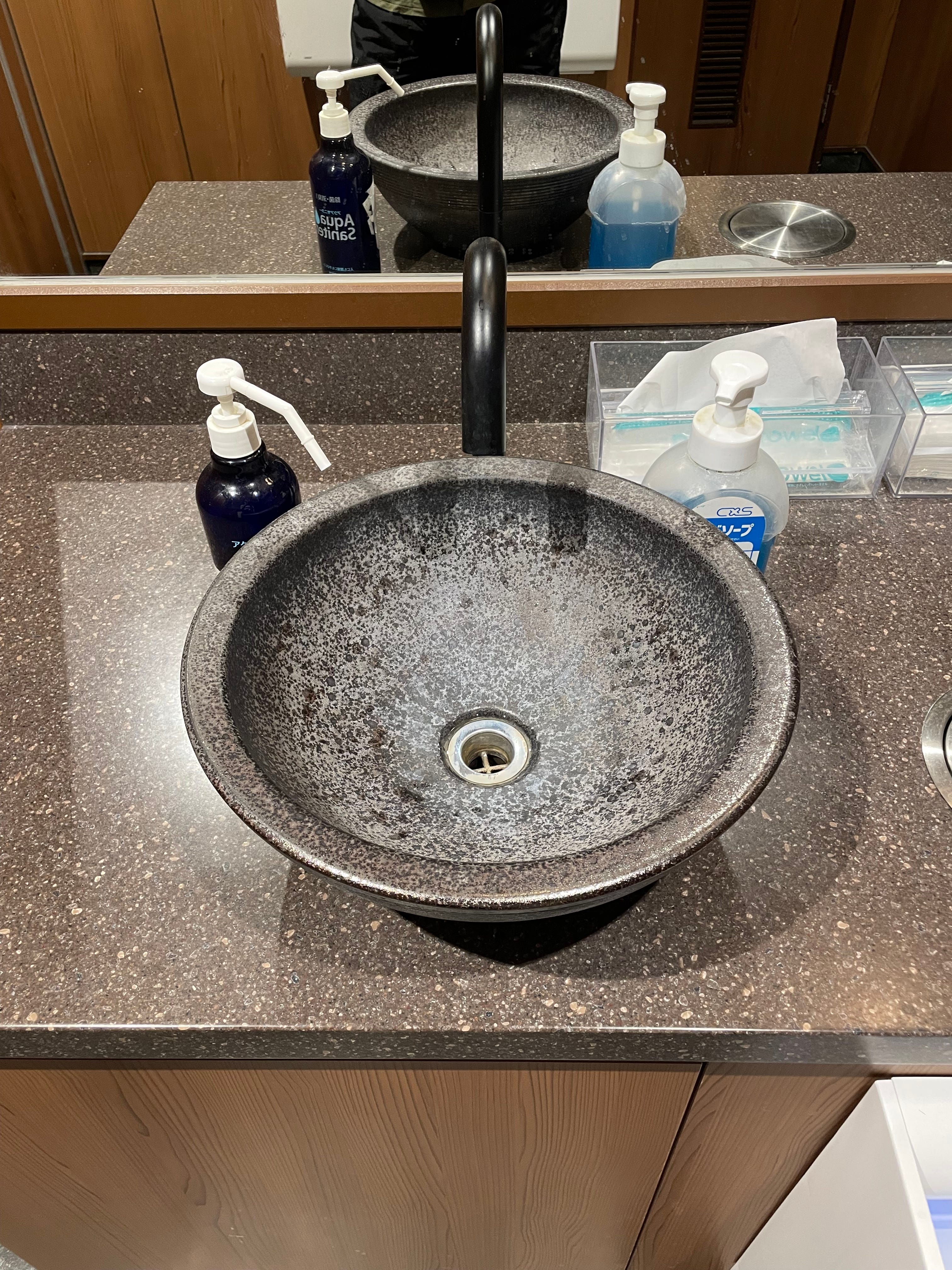
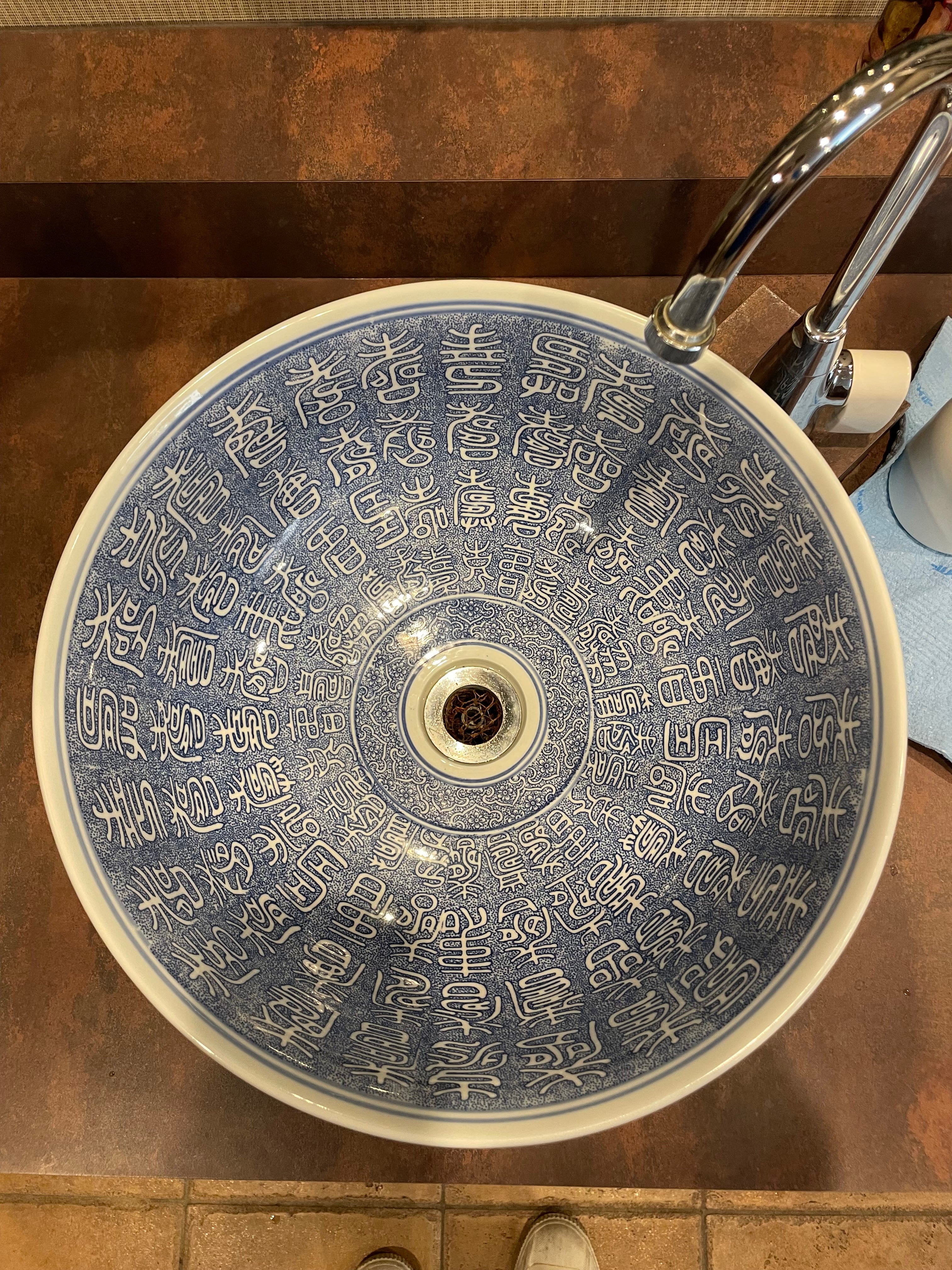
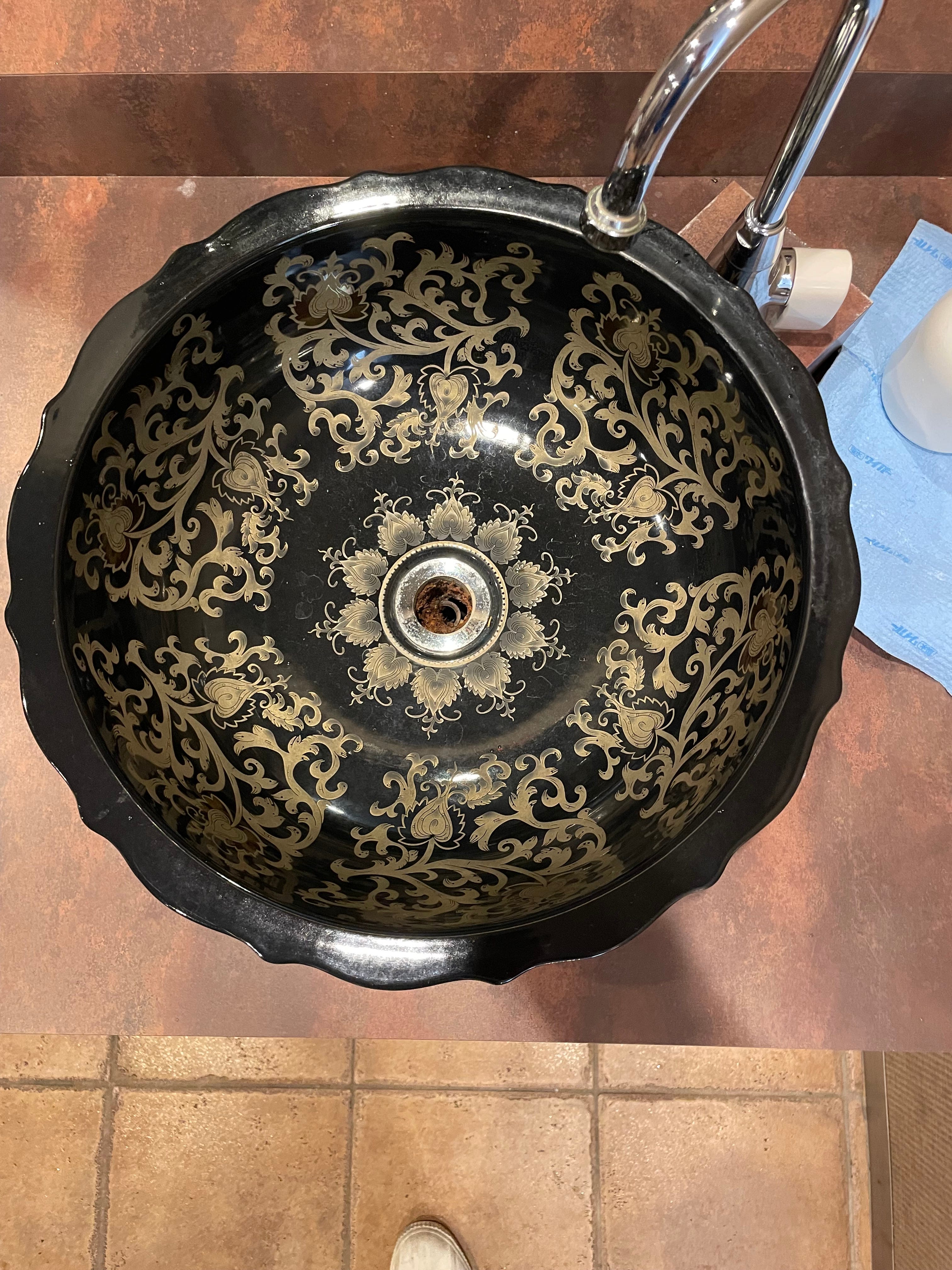
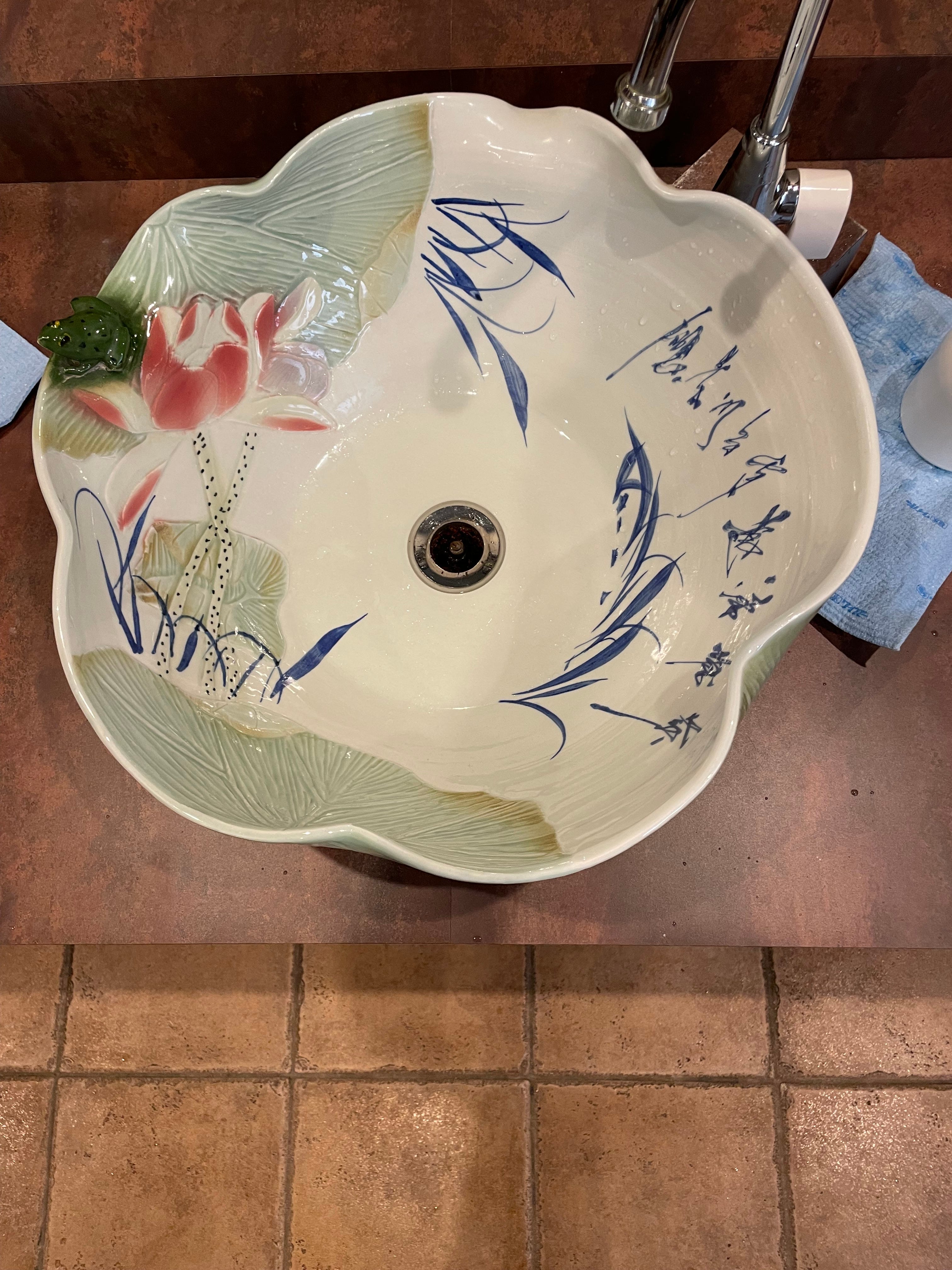
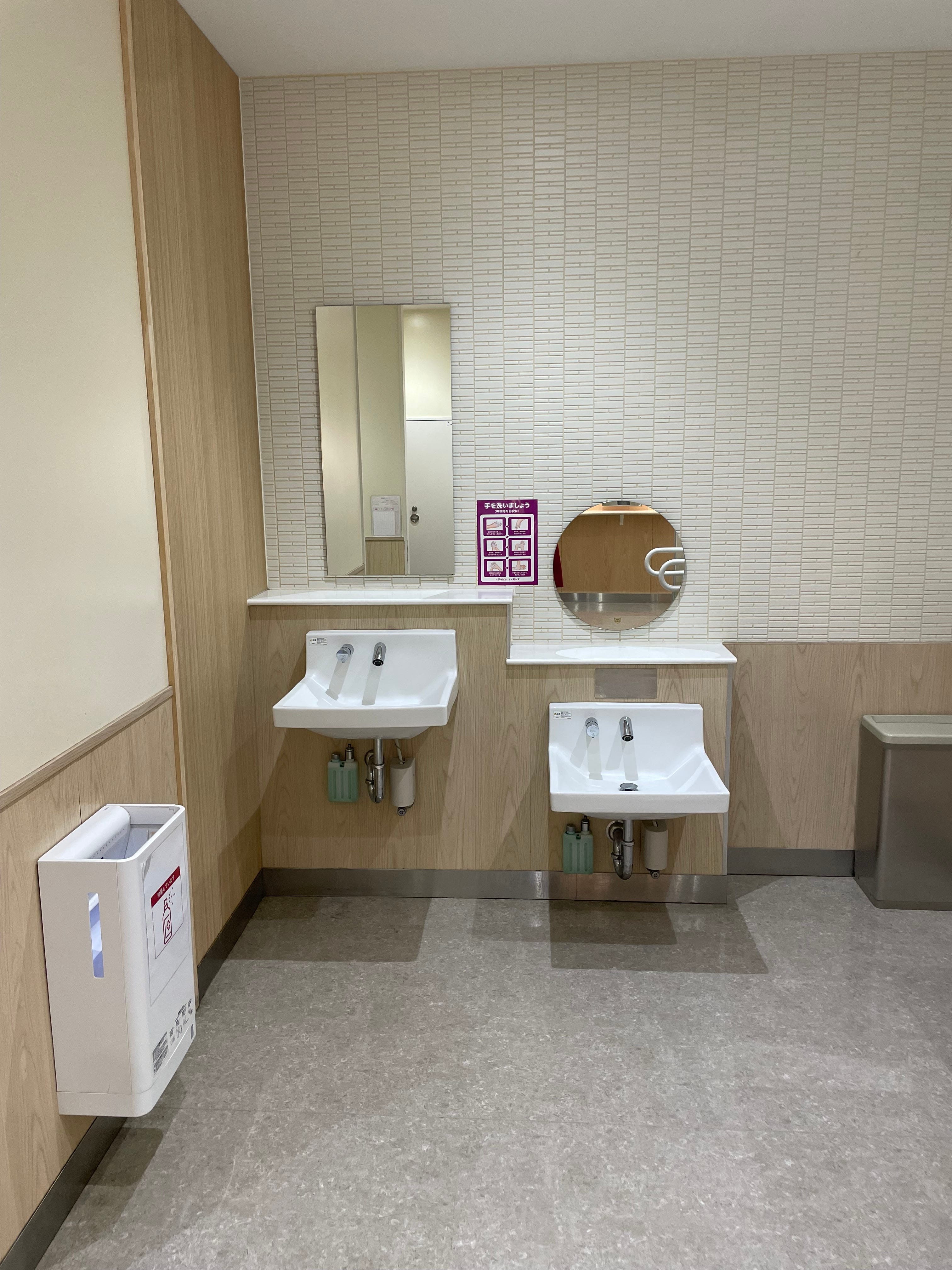
Probably my favorite part about the sinks here is that it’s entirely normal to be washing your hands next to sink that is significantly lower to the ground than the one you are using - these are for children! In an earlier entry I wrote about the value of independence in Japanese parenting and creating capability in daily tasks is a major part of this. Instead of Japanese parents having to hoist their small 4- or 5-year-olds up to an adult-height sink, these children are able to lather and rinse their hands on their own, able to reach everything they need and feel a sense of accomplishment on an individual level and belonging on a societal level.
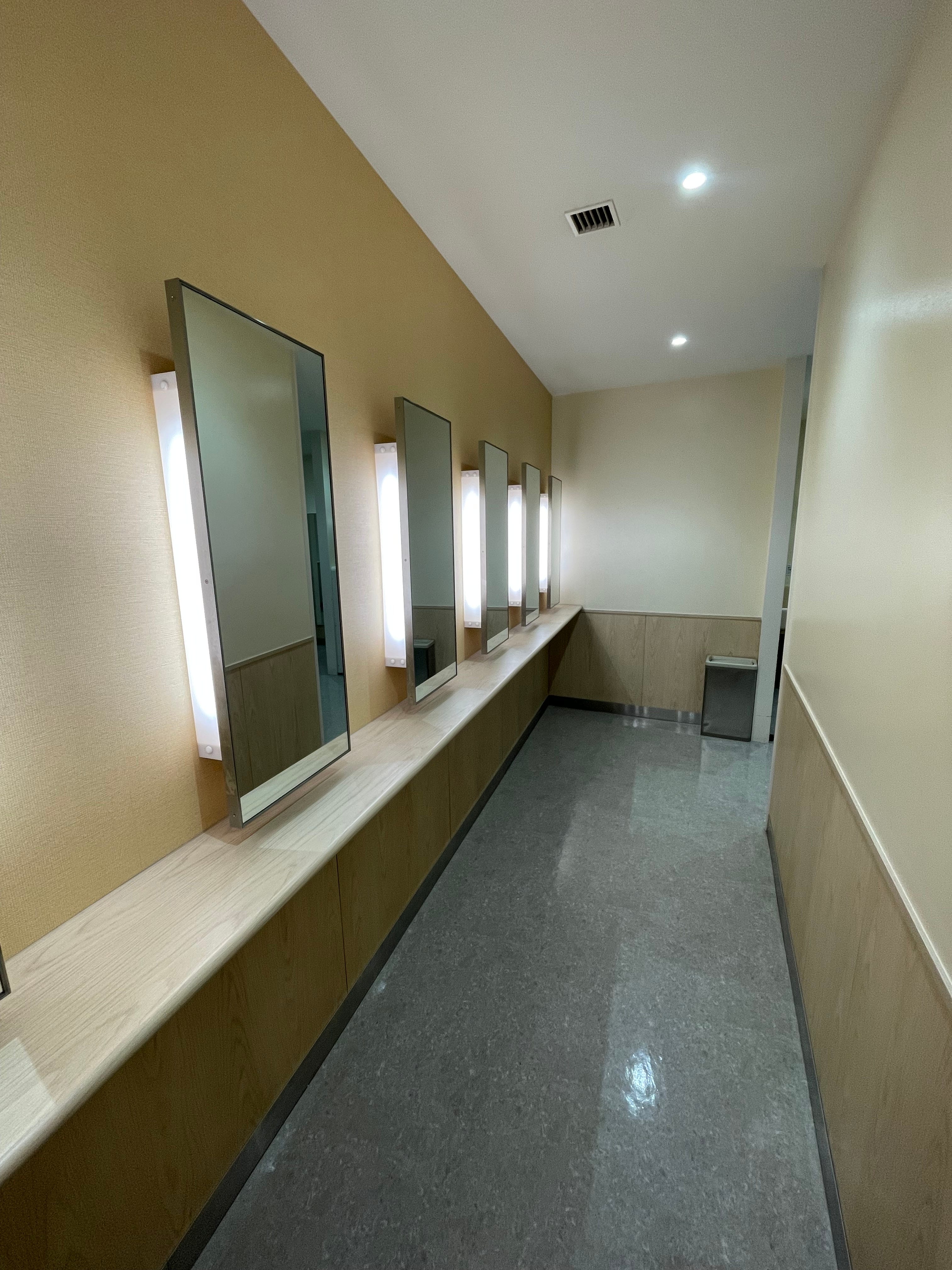
Nearby the sinks there are occasionally extra rows of mirrors. Sometimes there are multiple aisles of sink-less mirrors or even a whole different room full of mirrors. I’ve seen women making slight adjustments to makeup, doing a total makeover, brushing their hair, combing their bangs or taking selfies. During hot summer months or extra rainy days these areas tend to be more crowded as the harsh elements make touch-ups are necessary.
Lastly, I feel it’s important to demonstrate how the Japanese consideration for all of its citizens manifests in the bathroom setting. Especially in heavily trafficked areas such as malls, airports and major train stations I’ve walked into restroom areas that are extensive in their services.
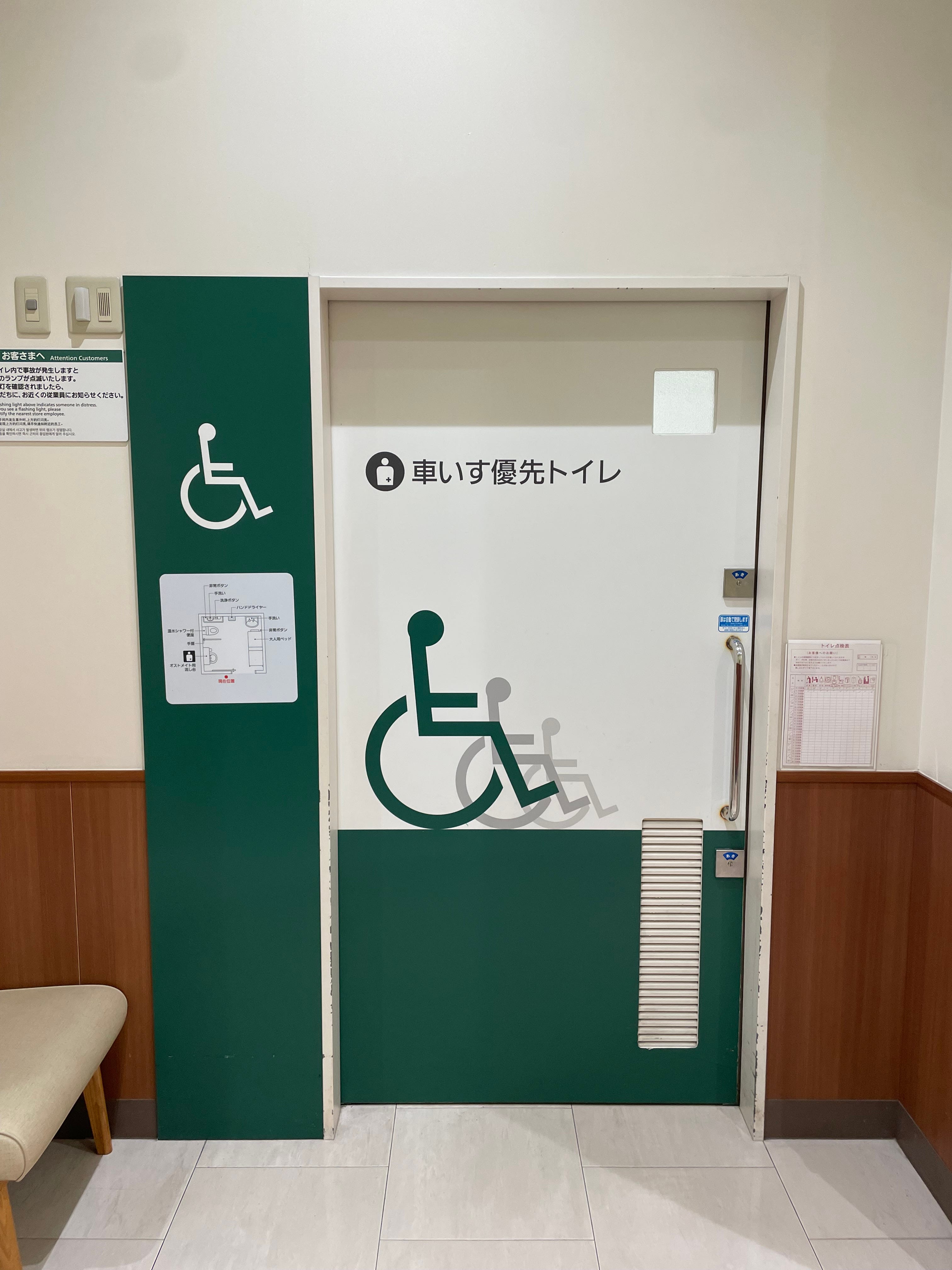
Of course, there are the handicap restrooms which are entirely separate from the men’s and women’s rooms. Instead of just an oversized stall in the back, people with disabilities receive a specific room with a large, sliding private entrance.
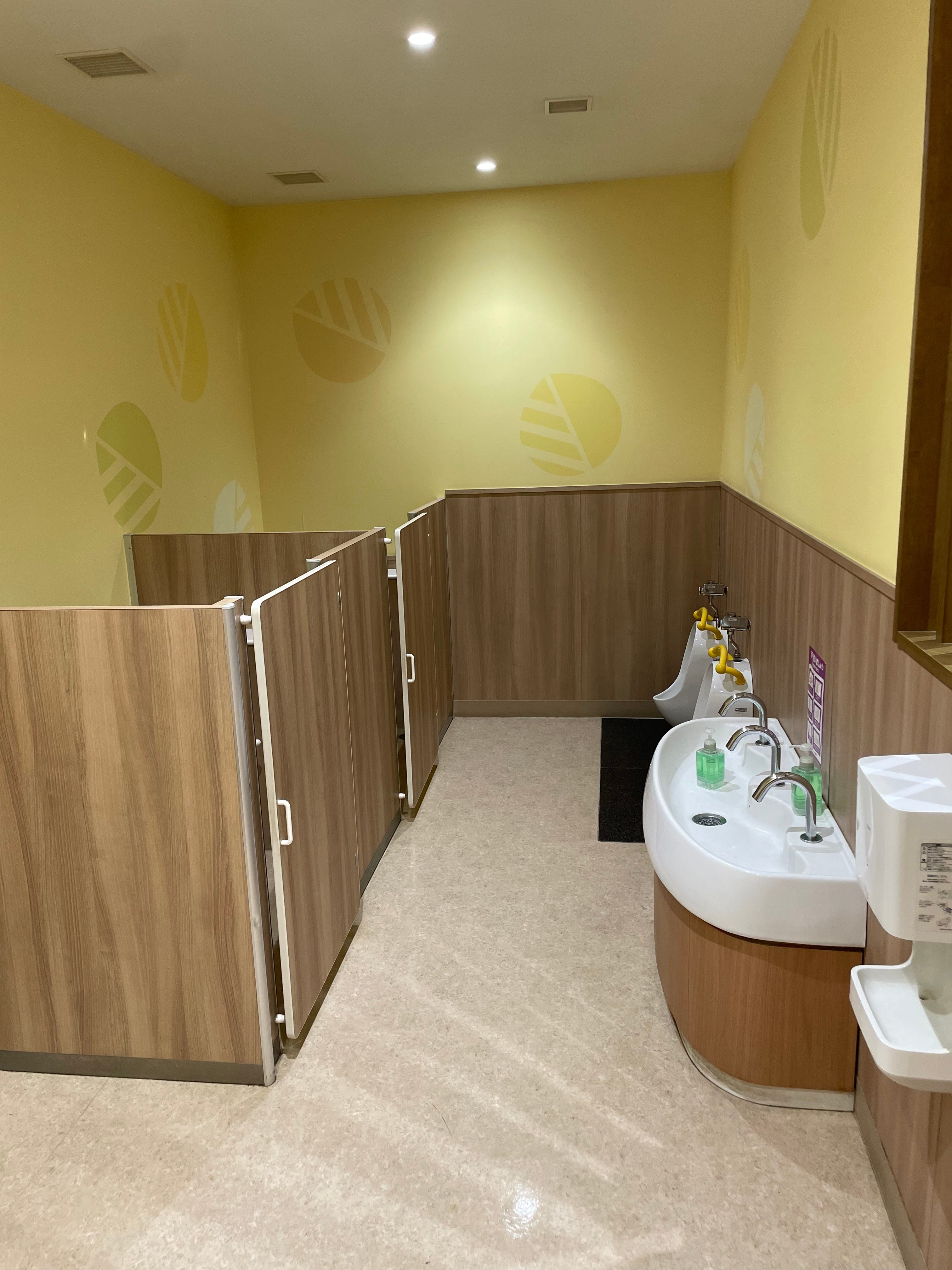
The child-sized sink is adorable and admirable, but just last week during lunch at a mall food court I stumbled onto a completely child-centered restroom. There were mini-urinals, stalls with low walls and low seats, and naturally the low sinks to finish off the job. Dymond said that he had a similar bathroom present at the daycare he worked at in Japan in 2023. I’ll be honest, I’ve worked at quite a few preschools and kindergartens in the U.S. and those low-walled stalls were still a first for me.
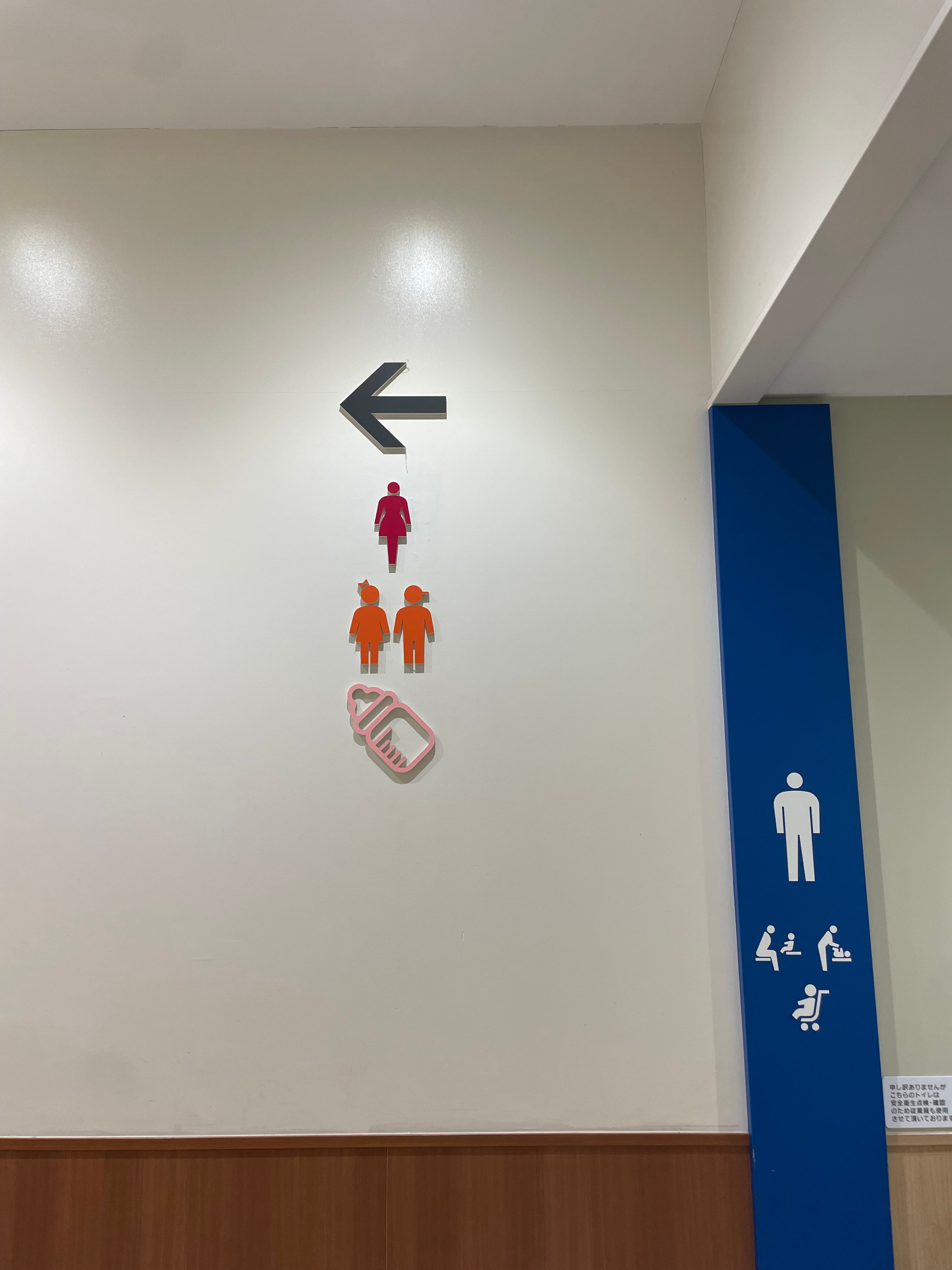
We can’t forget the mothers! Don’t worry, the Japanese don’t. They also remember the fathers too, and I have seen my fair share of signs for changing tables, baby seats and child-height sinks advertised on the doors of men’s restrooms as well.
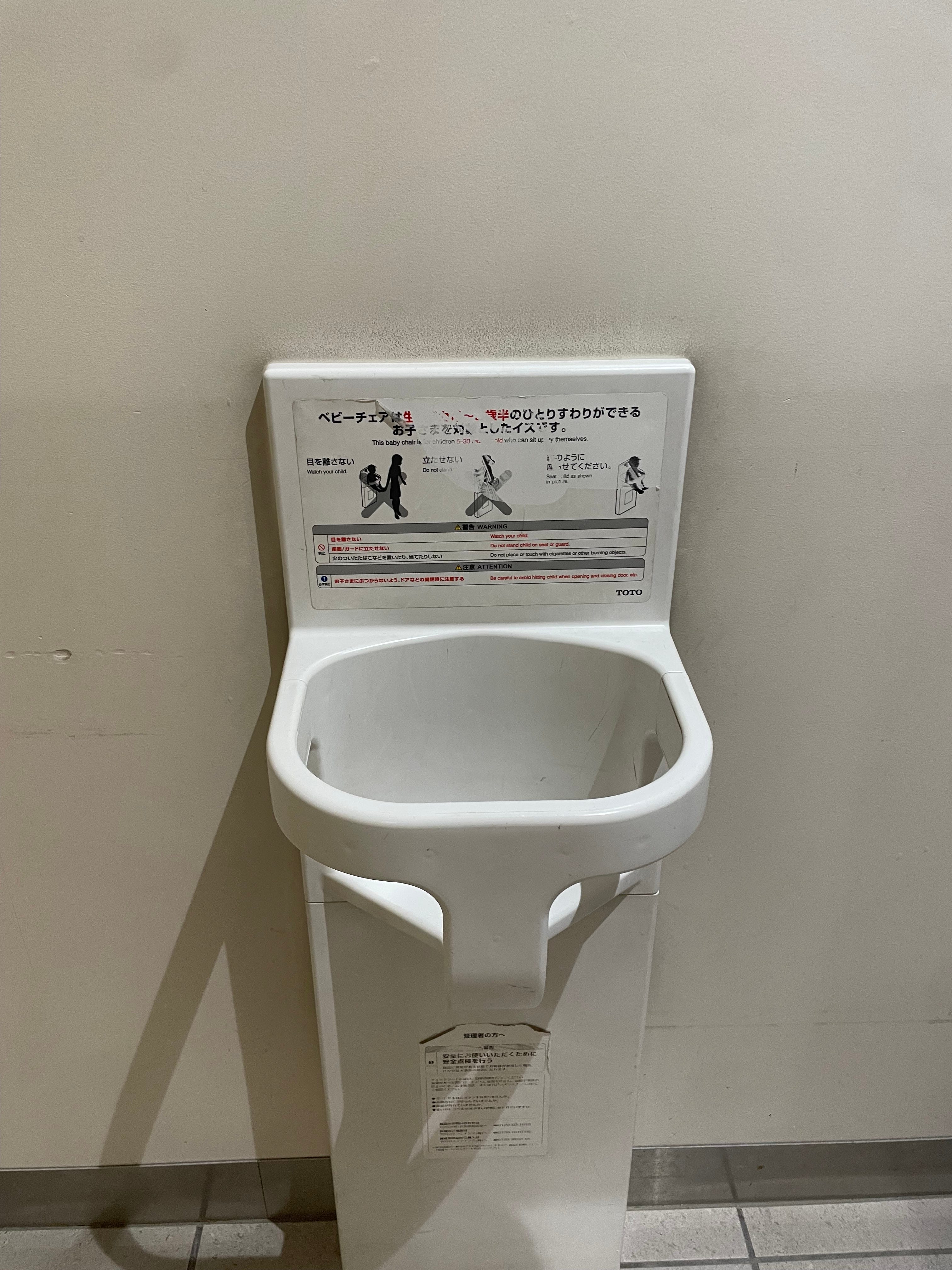
But, for the women the services are thorough - as they should be! In at least one stall there is usually a baby seat mounted to the corner of the wall, so that your child doesn’t lick the floor while you’re attempting to relieve yourself. I can imagine that comes in handy!
Changing tables are also ever-present and these are actual tables, by the way, not always just a hard plastic fold-out from the wall but real bases standing on the floor with a cushioned pad for your precious little one.
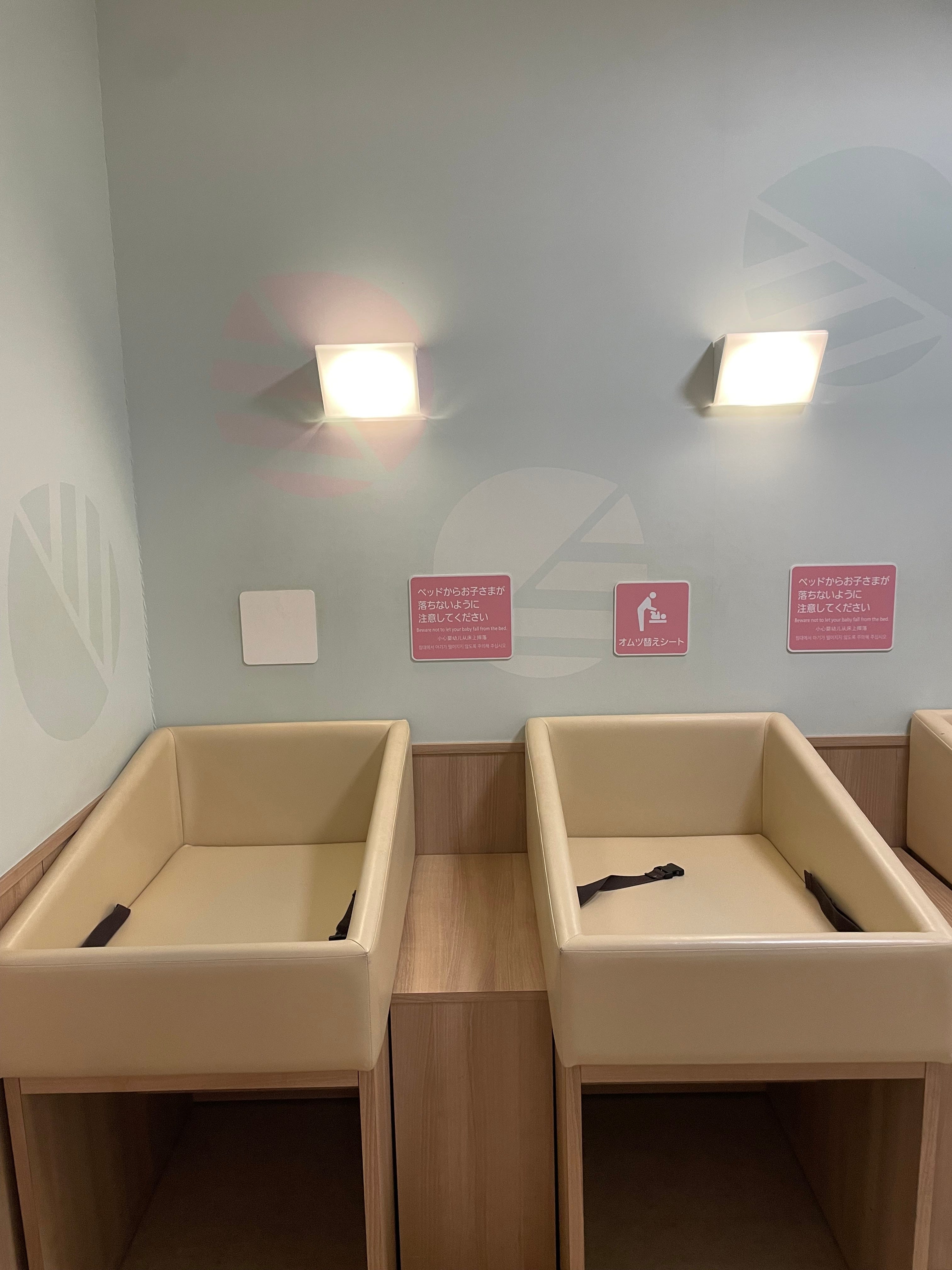
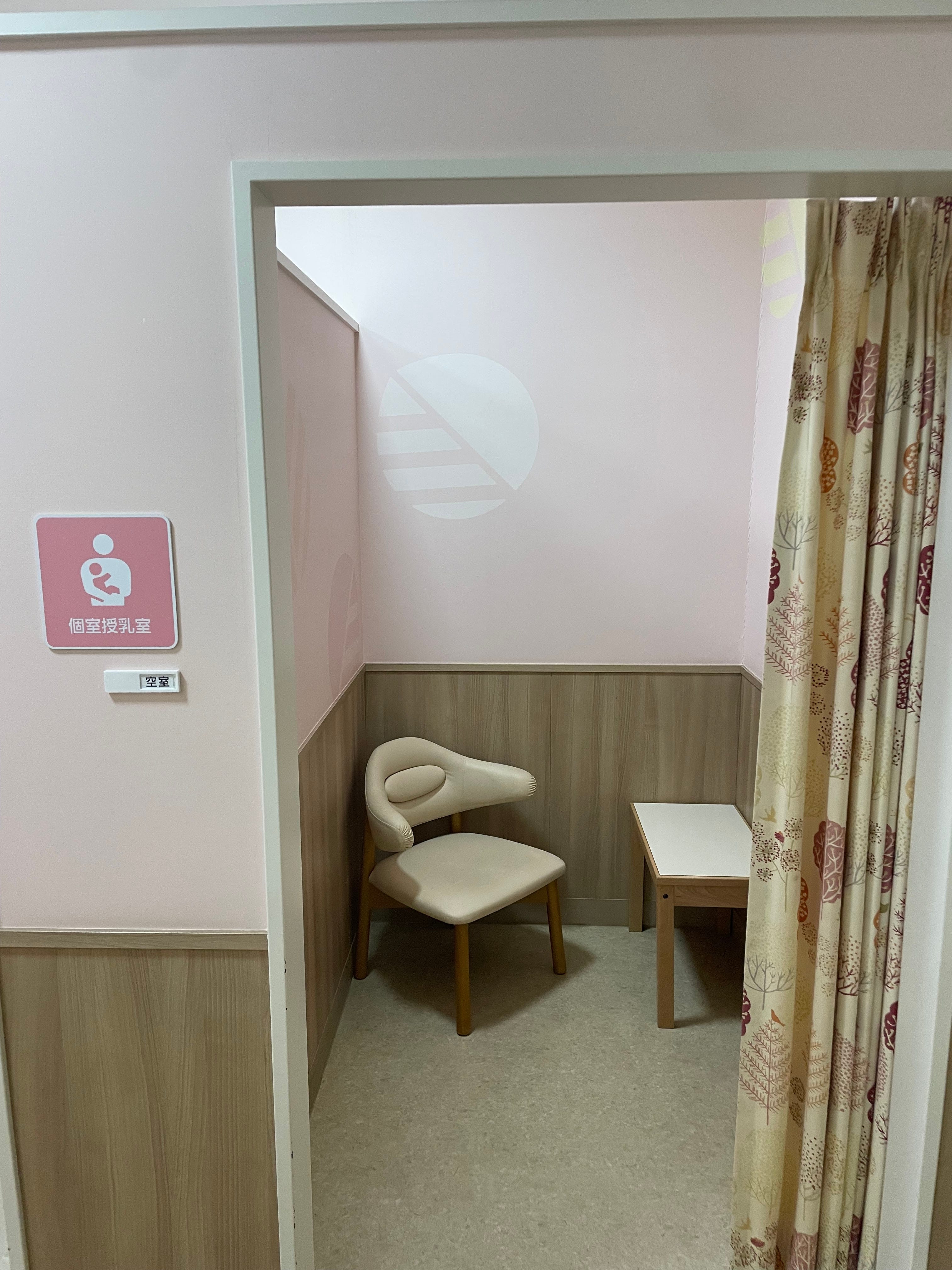
I’ve also spotted many nursing rooms. They are often next to bathrooms but still distinct and discrete. They have curtains for privacy and padded chairs for comfort.
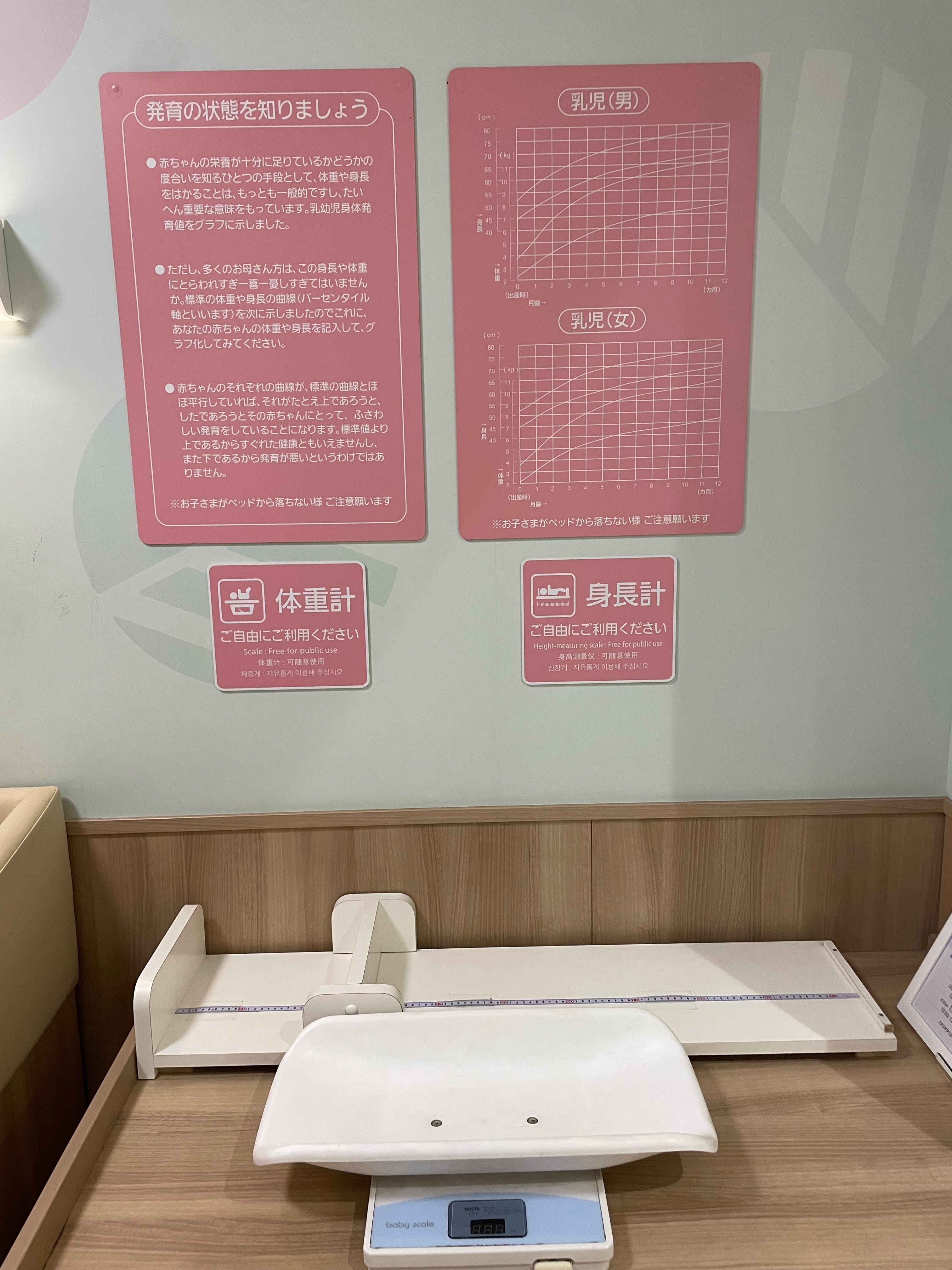
The mother-center below even had a long line of changing tables and a place to measure the height and weight of your growing child. At the mall!
Of all the features that I mentioned above, only the bidet is common in households. I am always intrigued by the various reactions of our foreign guests when I suggest taking full advantage of the bidet experience. Apparently, it is a little controversial (or at least out of the average American’s comfort zone) and it has become one of my favorite questions to ask people when showing them around Tokyo since it seems to be a love it or hate it kind of a thing.
I wonder what your favorite or most horrifying bathroom experience abroad has been? Surely you haven’t spent close to an hour locked in a Moroccan restroom while yelling and pounding on the door… or have you?
In peace,
Leila
I really enjoyed this article! The inclusivity is deeply touching. As a mom of two little ones, those bathrooms would be a dream!